
Why Some Pupils Score Under Their Level on UKMT Paper Tests

Every year, lots of pupils across the UK enter UKMT competitions. While many are excited to take part, not all end up scoring how they or their teachers had hoped. In fact, some pupils who normally feel confident in maths end up surprised or even discouraged when their score falls below what they usually get in class. This does not mean those pupils suddenly forgot everything. UKMT papers are different from regular school tests, and that difference can catch some students off guard. When we look closely at why some pupils underperform, it opens the door to better ways of thinking and learning, not just for competitions, but for learning maths in general. Common Misunderstandings About the Test One common cause of lower scores is that pupils often walk into a UKMT paper expecting it to feel like school. But it does not. These are not tests where you work through problems from a textbook or repeat something you have practised dozens of times. • Pupils may expect clear steps, but many questions feel more like puzzles with missing pieces • The wording can be unusual, which makes the real question harder to spot • Some pupils get too focused on being “right” and feel pressure to solve every question perfectly When that happens, they might rush through, freeze up partway, or doubt their first thoughts. We have seen plenty of strong thinkers get stuck simply because they were expecting the wrong kind of test. Timing and Pacing Worries Even if a pupil starts off strong, time pressure can shift everything. These competitions are short, usually just an hour, and have a lot of questions, especially for younger pupils who may not be used to pacing themselves over a timed problem set. • Getting stuck on one question early can throw off the timing for the whole paper • Some students speed up, trying to finish every question no matter what, which often leads to careless mistakes • Others may move too slowly, spending too much time thinking deeply about each part and not reaching the end It is tricky to judge how long to spend per question, especially since some feel deceptively simple at first and turn out to be time-consuming. Students hoping for a perfect score may try to do everything, and end up slipping on accuracy. Reading Words vs Solving Problems A less obvious challenge is how the questions are written. Many UKMT papers use strange phrasing, or couch a maths problem inside a story or unfamiliar format. This makes reading skills just as important as calculating skills. • Some pupils struggle to turn a story-based question into something mathematical • Others misread a small part, a number, a condition, or a unit, and make an error that throws off everything else • Even when the maths is simple, the wording can hide the point So while a pupil might know how to do the maths, they miss the clue tucked in the sentence. That is not a reflection of their skill, just a sign that the question needed different reading strategies. The Role of Confidence and Mindset UKMT problems are designed to be tough. Not all pupils know that going in. For some, the moment they get stuck, a small voice in their head starts asking, “Am I not good at this after all?” That doubt shakes their confidence. • Some pupils stop trying new approaches because they are afraid of getting it wrong • Others believe being “good at maths” means finding the right method straight away, and do not know what to do when that does not happen • It is common to lose motivation if the first few questions do not go well But what these tests really reward is trying, adjusting, and thinking in fresh ways. A rigid view of “smart” can make pupils feel like they have failed before they have really had a chance to solve anything. What These Struggles Can Teach Us When a pupil scores below their usual level, it does not mean they do not understand maths. It shows us something useful, exactly where their thinking habits or strategies can grow. • Struggles with timing can mean it is time to practise short, timed sets • Missing clues in questions can show where to slow down and read more closely • Avoiding hard questions can tell us it is time to build resilience, not just knowledge These are not failures. They are signs to notice. They help us support the real growth: learning how to manage mistakes, handle frustration, and experiment when things are not obvious. Learning More Than Just Scores Tests like these measure something different. They are not about how fast you can solve a known problem. They are about how you think when something is not familiar, how you look at patterns, how you react when you are unsure, and how long you stay curious. • Pupils who take time to reflect on how they think often grow faster than those chasing top marks • Building the habit of trying, reviewing, and learning from missed questions brings more long-term progress than any single score This is where families and teachers play a big role. When we shift focus away from final marks and instead ask, “What did we learn here?” it changes the way pupils see both mistakes and success. By February, many pupils are getting closer to spring-time competitions in school. It is the perfect time to gently adjust habits, build confidence, and remind them that even tricky tests are just another way to grow. UKMT competitions are not the end goal, they are just one fun, challenging stop along the way. Preparing for UKMT competitions can be a unique challenge, but with the right support, students can learn to navigate tricky problems and unfamiliar question formats confidently. At Learnfluid, our expert tutors specialize in developing strategies for success by focusing on thoughtful reading and a resilient mindset. Let us help your
Fun Ways to Tackle the UKMT Without Getting Too Stressed

Lots of pupils across the UK take part in UKMT competitions every year. These tests can be fun, exciting, and a bit nerve-wracking all at once. Even if you usually like maths, it’s normal to feel some pressure when the questions look unusual or tougher than school ones. But getting ready doesn’t have to feel stressful. In fact, there are ways to practise and prepare that help you feel more relaxed and even enjoy the challenge. We’ve put together some ideas that can make the build-up feel more fun and help you walk into the competition feeling calm and ready. Turn Practice Into a Game Practising for a maths competition doesn’t have to mean sitting quietly with a workbook for hours. It can actually feel like play if you keep things light and mix up the way you practise. • Try out riddles or short logic puzzles that stretch your thinking in a fun way. You can find printable puzzles or apps that have daily challenges. • Set little timed races where you solve three questions in ten minutes. This adds just enough pressure to feel real without stressing you out. • Work on problems with one or two friends if you can. Talking it through together can make tricky puzzles feel way less frustrating. • Keep track of your small wins. Solved a type of problem you couldn’t before? That’s worth celebrating. You don’t need to wait for perfect scores to feel proud of your effort. When maths practice feels more like a brain game than a test run, it’s easier to keep going. Even if you get some wrong, you’re still getting better every time. Learn the Puzzle Patterns At first glance, UKMT questions can look completely different from what you see in school. But if you practise often, you’ll start to notice they follow a few common patterns. Recognising these can help you feel more confident, even with brand-new questions. • Look out for your favourite question types. Maybe you like questions with number patterns, or puzzles with properties of shapes. Once you know what suits you, those parts won’t feel so tricky. • Keep a notebook of the question “shapes” you see often. Maybe one type always asks you to test a few values, or another always hides a simple trick. Learning how the problems are built means you’re spending less energy guessing where to start. • Don’t worry too much about remembering exact answers from old tests. Focus more on how the solutions work. If you can understand the steps, you’ll be better prepared when the numbers change. UKMT competitions reward problem-solving skills more than memory. So spotting the patterns behind the questions can help you feel more in control and less surprised. Stay Calm When You Get Stuck It’s completely normal to hit a question that feels impossible. That doesn’t mean you’re bad at maths. In fact, the UKMT is made to include tough problems that few people get all the way through. The key is knowing how to stay steady when that happens. • When you hit a puzzle that doesn’t make sense, stop and take a few slow breaths. That helps your brain shift out of panic mode. • Read the question again, slowly. Sometimes, all it takes is a second look to spot a clue you missed. • Try small steps at first instead of jumping to the whole solution. Even writing down the facts or drawing a picture can give you a starting point. • If it still feels messy, move on. It’s okay to skip a question and come back later with fresh eyes. Getting stuck is part of the test, but staying stuck isn’t. Learning how to calm your mind in the middle of a hard thinking task is one of the best skills you can build, and it helps far beyond the maths paper. Build Smart Test-Day Habits The day of the competition can feel full of nerves, especially if you’ve been thinking about it for weeks. Thankfully, a calm morning starts the night before. • Get plenty of rest so your brain feels sharp, not foggy. A tired mind can make easy questions seem harder. • Eat something filling before the test. Not too heavy, but enough to keep your energy steady. • Pack your pencil, eraser, and anything else you’ll need the night before so you’re not rushing in the morning. • Practise a short routine you can take into the exam, like breathing for five seconds, reading every question twice, and jotting quick notes before you solve. Having a rhythm can help settle your nerves. It’s also smart to practise working at a steady pace when you do trial papers. Racing through fast or spending too long on a single question can both lead to trouble. You want to feel like you’re in charge of your time, not the other way around. Why Feeling Relaxed Can Lead to Better Thinking When your body feels calm, your brain has more room to think clearly. Confidence in maths often grows not from knowing all the tricks, but from feeling steady enough to give each question your best try. • If you’re enjoying the process, you’re more likely to spot patterns, try creative methods, and keep going when things get tough. That helps you stay focused for longer too. • When you treat a test like a chance to play with ideas and see what you can figure out, not just a score to chase, it takes a lot of the pressure off. That’s where the real learning comes in. We’ve found that over time, the pupils who do best aren’t always the ones who know the most facts. They’re the ones who are willing to be curious, thoughtful, and a bit bold when the question gets hard. Getting used to that mindset takes practice, but every small step counts. February is a good time to start building those habits, especially for pupils entering spring competitions.
What to Do if Confidence Drops After a UKMT Practice Mock
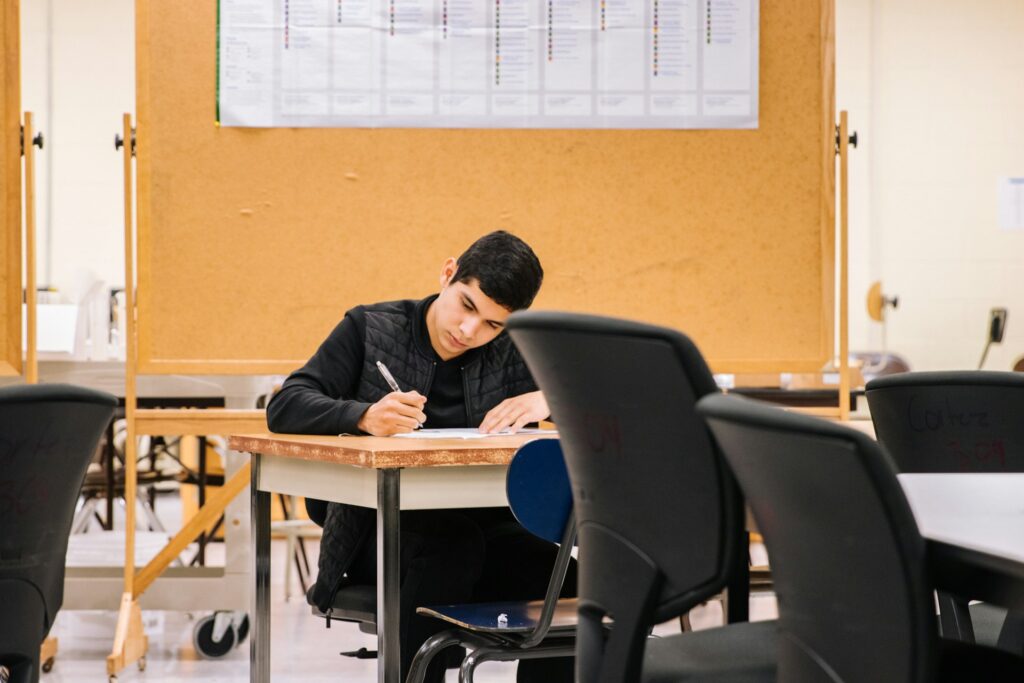
Taking part in UKMT competitions can be really exciting, especially when you’re getting ready with a practice mock. But if your score didn’t turn out how you hoped, it’s easy to feel like confidence has dropped quickly. This happens to a lot of pupils, especially when they care about doing well. A tricky mock doesn’t mean you’re not good at maths. Sometimes, it just means the questions caught you off guard, or you didn’t feel at your best that day. Mock papers are meant to show what to work on, not to make you feel as if you’ve failed. In fact, many pupils see a dip before they get stronger. There’s a way forward, even after a mock that didn’t go to plan. When a Mock Doesn’t Go to Plan Finishing your mock, checking your answers, and finding out your score can feel like a blow. You might feel stuck, frustrated, or even unsure about whether to keep going. That’s a normal reaction, plenty of pupils feel the same, especially if it’s their first time practising this type of question. UKMT competitions often include problems that twist maths ideas in odd ways. It’s not always about how much you’ve learned, but how carefully you read and how you think things through under pressure. Sometimes, just one small word, like “only” or “at least,” can change what the problem is asking you. Or you might miss a pattern developing because the numbers looked random at first glance. If your score was lower than expected, it doesn’t mean you won’t do well later. It means you’ve just taken a first step. Small Mistakes Don’t Mean Big Problems A lot of the time, lower scores come from small things going wrong. Maybe you rushed through a problem that needed more time. Maybe you skipped a check at the end and missed a slip in your working. Or maybe you got stuck on one question and let it affect how you felt about the rest of the test. These are habits that can change. With guided help and regular practice, pupils can learn to slow down, double check, and stay calm when a question doesn’t seem clear. We always remind learners that in UKMT competitions, most people get things wrong before they get them right. That’s not a setback, it’s how the learning sticks. What to Focus on Instead of the Score It’s easy to stare at the final number on the mock and feel discouraged. But there’s more value in looking at what actually happened during the test. • Where did you feel confident, and where did your working start to break down? • Were there questions you guessed on just to move on? • Did you stay calm, or did time pressure throw you off? Instead of thinking, “I got this many wrong,” it helps to spot one or two patterns. Maybe you often lost marks on the last step. Maybe you kept doing the hard version of a question when a simpler way was there. That’s where real progress starts, not with fixing everything, but with fixing one thing at a time. Why Talking Through Problems Helps When you get stuck on a practice question, it often feels hard to see what went wrong until you explain your thinking out loud. Talking with someone else, like a mentor or teacher, can highlight the part where the problem turned sideways. What felt confusing on paper often becomes clearer when you hear yourself walk through it step by step. • Sharing your thoughts can help spot small skips or mistakes you didn’t see • A good listener can ask useful questions that lead your thinking in a new direction • Saying things aloud builds a stronger memory of the method for next time This is where support makes the biggest difference. A short chat about one question can often teach more than doing five new ones alone. Rebuilding Your Approach Slowly After a tough mock, it’s tempting to step away or try to forget it ever happened. But the better move is to take smaller steps. Start with a few short sessions each week. Pick one problem type that you found tough and practise just that. It helps to begin again with questions that feel easier. Getting those right builds back belief and gives you a strong base to stand on. From there, more complex questions feel more reachable. • Give each session a short goal, like understanding a single topic or solving one kind of ratio problem • Keep notes on what feels easier over time • Don’t rush back into another full mock until you feel steadier Confidence doesn’t have to return all at once. It grows each time a question that once felt impossible now makes sense. Learning to Keep Going When It Feels Hard Everyone slips in confidence now and then, especially when learning something that stretches your thinking. We see it often with pupils preparing for UKMT competitions. One tough result can suddenly make things feel out of reach, when really, the best learning is happening in the middle of that discomfort. Mistakes aren’t a sign to stop, they’re signs that something new is being built. Over time, you’ll remember that tricky mock not as the moment everything fell, but the moment your skills started to shift. With steady support and some problem solving in small bits, your next mock will feel different. Hold onto that. Your effort matters more than your score. Keep going, just a little at a time. When preparing for UKMT competitions, it’s crucial to turn challenges into stepping stones. At Learnfluid, we understand that a supportive environment can make a vast difference in boosting confidence and enhancing problem-solving skills. Whether your child is facing tricky questions or needs a boost in resilience, our personalized tutoring approach will guide them through every hurdle. Connect with us today to see how we can transform your child’s learning experience.
Everything to Know About the UKMT’s Junior and Intermediate Levels

Every year, thousands of pupils across the UK take part in UKMT competitions to stretch their thinking and take on more challenging maths problems. It’s a popular choice for learners who enjoy working things out step by step and want to see what problem-solving feels like outside of usual classwork. For many, the Junior and Intermediate levels are where it all begins. These two levels offer an accessible way into advanced maths challenges for younger pupils. They’re not about memorising formulas or racing through questions. Instead, they help pupils think better, not just harder. Whether it’s spotting patterns, testing ideas, or making a guess and seeing where it leads, these problems encourage careful, flexible thinking. Over time, that kind of practice builds both confidence and skill. What the Junior and Intermediate Levels Are All About The Junior and Intermediate rounds are the first main stages of the UKMT structure. They’re open to pupils in years that match their names, Junior for those in Years 7 and 8, and Intermediate for those in Years 9 to 11. The level of difficulty changes slightly between them. Junior questions keep things short and clear, often focusing on straightforward reasoning and noticing simple patterns. The Intermediate ones may feel more layered and ask for a bit more planning, but they’re still built around ideas instead of complex calculations. Rather than test whether a pupil knows every topic, these competitions try to see how well someone can think. That means skills like: • Using logic to rule out wrong answers • Spotting patterns in shapes or sequences • Making small guesses and adjusting as needed • Understanding how one step leads to the next It’s often not about knowing the “right” method, but trying out a path and staying flexible. What to Expect on the Day UKMT competitions are written tests, but they feel very different from school exams. Pupils are usually given a booklet of multiple-choice questions to complete in a set amount of time, often an hour. There are no calculators allowed, and most questions can be solved with thinking alone. These questions can feel more like puzzles or riddles than the usual kind seen in a school workbook. A question might involve spotting a trap in a pattern or figuring out what can’t be true instead of what is. That’s on purpose. The idea is to reward careful thinking, not fast calculation. Here’s a rough idea of what to expect: • Around 25 questions, increasing in difficulty as you go • Strict time limits that make it important to work steadily • No partial marks, so guessing can feel risky • Some questions that are quite quick, others deliberately tricky It’s normal to feel stuck. Many pupils only answer part of the test and still do well, especially if they pace themselves and avoid rushing. Common Trouble Spots and How to Tackle Them Even confident pupils can struggle with parts of the competition. That’s because these problems often hide the trick in how they’re worded or arranged. Knowing where slip-ups happen can help pupils prepare calmly and clearly. Some common trouble spots include: • Moving too fast and misreading the question • Starting to solve before checking what’s being asked • Skipping explanation steps in their head • Giving up too soon when the answer isn’t quickly clear One of the smartest habits pupils can learn is to pause. Reading the question slowly once, then again with focus, can help spot small hints. Underlining key words or jotting a quick plan before solving can make a big difference. Another helpful habit is to check if the answer makes sense before moving on. If there’s time, asking, “Does this fit what the question asked?” can catch small mistakes. These small checks help build accuracy over time. Why These Levels Matter Beyond the Competition Completing the Junior or Intermediate stages is more than just a one-day event. These early rounds help pupils develop skills that stay with them long after the test ends. The types of problems they see often help fill in the gaps between school maths and real problem solving. This kind of challenge builds confidence. Trying, getting stuck, re-trying, and finally spotting what works, those moments show pupils that tough problems aren’t scary when they’re taken step by step. UKMT competitions also encourage habits like: • Slowing down to think • Learning from small errors • Trying different paths until something works These habits often show up later in schoolwork. Over time, pupils can start to approach regular maths lessons with more focus, resilience, and patience. Some may even qualify for further rounds like the Grey or Pink Kangaroo, which add another layer of challenge. But even without those, the practice itself has long-term value. Building Maths Confidence Through Practice One of the best things about trying UKMT competitions is realising that getting it “perfect” isn’t the goal. These tests reward trying, thinking, and learning from what didn’t work the first time. Pupils who get stuck aren’t failing, they’re doing the real, useful work of maths. The more someone practises, the more they start to notice repeating patterns in how questions are built. That awareness makes future problems feel easier to manage, even when they’re new. With regular practice, many pupils begin to feel proud of their process, not just the final score. This kind of growth isn’t about being the best. It’s about learning to work through the messy parts, the wrong answers, the unsure moments, and seeing them as steps forward. That’s what builds real maths confidence. And it’s something that lasts beyond any one competition. Ready to help your child tackle the exciting challenges of UKMT competitions? At Learnfluid, we specialize in nurturing young minds through expert-led tutoring sessions that focus on building strong problem-solving skills and lasting maths confidence. Whether it’s enhancing exam strategies or working through tricky practice questions, our personalized approach ensures your child feels prepared and empowered. Reach out today to see how
How to Spot Gaps in Reasoning During UKMT Practice Sessions

When pupils begin practising for UKMT competitions, it’s not unusual for them to feel confused by certain questions. Even when they’ve revised the right topics, some problems seem to come out of nowhere. That feeling usually doesn’t mean the maths is too difficult. It’s often a sign that there’s a missing step in how they’re thinking things through. Spotting these gaps doesn’t mean finding wrong answers. It’s more about noticing where a pupil’s thinking jumps ahead or skips something important. By catching these moments during practice, learners can grow into stronger problem-solvers who feel more prepared when the questions get tricky. That’s why it helps to slow things down and really look at what’s happening in each step. Understanding What Reasoning Gaps Look Like It’s easy to think of a mistake as just an error with numbers, but most reasoning gaps happen before an answer is even written. They show up in the thought process. Maybe a pupil goes from reading the question straight to writing a solution without showing how they got there. Or maybe they change strategies halfway through without noticing. These gaps usually don’t come from laziness. Most of the time, they show up when someone is trying to work quickly or feels unsure. Timed UKMT practice can bring that out. A pupil might feel pressure to finish on time and rush past careful thinking. Here are a few common signs we look for: • Answers appear with no clear steps before them • There’s a sudden jump in logic with no explanation • The pupil copies a pattern from another question without checking if it fits When we help pupils notice these habits, it’s not about pointing out flaws. It’s about learning how to pause, think again, and fill in the blanks. Where Gaps Tend to Happen in UKMT Practice Reasoning gaps often pop up in questions that ask for multiple steps. A student might understand the beginning and the end but struggle to connect the middle. That space between ideas is where things can fall apart. Sometimes, when faced with a question that looks similar to something they’ve seen before, pupils might skip ahead without realising that this version asks something slightly different. It’s important to teach them to pause and check exactly what the question wants before they launch into a solution. Sometimes the real issue is reading. UKMT problems can be clever, and it’s easy to assume we know what a question is asking before reading it fully. That small step, rushing through the wording, can lead to a mismatch between what’s being asked and what’s being solved. Other times, pupils believe they’ve found a quick trick. Maybe something looks like a question they’ve answered before, so they apply the same steps without thinking. But UKMT competitions like to play with structure and mix ideas. What worked last time might not apply now. That’s why we give time in practice to stop and ask, “Does this really work for this specific question?” Avoiding shortcuts helps learners build flexible thinking that can hold up under pressure. This flexibility is valuable, as UKMT is known for mixing familiar and new ideas in ways that can trick even careful students into making hasty leaps. Being aware of where gaps can creep in allows us to build strategies to slow down and really listen to the question. Discussing answers with friends or a tutor can shine a light on hidden reasoning steps that might be glossed over when working alone. It’s often easier to spot these slips in a group setting, since explaining steps aloud forces you to notice missing links. Supporting Learners to Slow Down and Check When pupils practise working slowly, they often start catching their own gaps. Speed isn’t always the goal. Some of the best progress happens in moments when we ask, “Why did I do that?” or “Does this really follow?” One helpful habit is having students speak their thoughts out loud or jot down little notes. Saying what they’re planning before solving the problem creates space between reading and action. That small pause can catch a disconnect between what they read and what they’re about to do. We also look at completed problems together and ask questions like: • Why did you choose this method? • Does this step follow clearly from the last one? • What pattern were you noticing here? Another useful idea is asking pupils to write one short sentence at the end of each question, explaining why they believe their answer makes sense. It builds a habit of self-checking that pays off over time, especially with challenge problems that aren’t clear from the start. Creating a calm, thoughtful environment in practice sessions encourages careful checking. If pupils get used to pausing and asking themselves, “Does this step fit the question?”, these checks become automatic, even during time-limited competitions. It’s not about working slower, just thinking more clearly in every moment. Even small diagrams or sketches can reveal reasoning gaps. Drawing a number line, sketching a triangle, or using arrows to link steps can show whether every part of the solution is properly joined up. Visual cues often make abstract thinking more concrete, which makes it easier to see where jumps are happening. Using Mistakes as a Map for Next Steps Mistakes give us direction. Rather than treating them like failures, we treat them as clues. Where did your logic change? What step was missed? Which line didn’t lead to the answer you expected? There’s always a reason behind a slip, and naming it helps students avoid repeating it. Over time, many pupils start detecting their own common patterns. Maybe they rush when numbers repeat, or they ignore diagrams, or they always forget the penultimate step. Once we can name these habits, we can work on changing them with purpose. When we focus on the steps, not just answers, we’re teaching students to trust their own thinking. They realise that solving UKMT problems isn’t about being perfect
Tricky Steps That Trip Up Most in UKMT Problem Solving Rounds

Every year, many students across the UK take part in UKMT competitions, and problem solving rounds are one of the most talked-about parts. These rounds ask pupils to do more than just remember maths facts. They ask for clear thinking, careful reading, and steady focus under time pressure. Still, we often see even confident pupils get stuck at the same points, not because they don’t know enough maths, but because certain question steps throw them off. These bits aren’t always large or obvious, they’re small details that sneak by and pull the problem off course. So let’s look at the common trouble spots in problem solving rounds and how spotting them early can help pupils get through more questions with more confidence. Misreading What the Problem Is Actually Asking Many pupils have the maths skills they need to handle the question, but they miss the real meaning of what is being asked. That could happen in the very first line, or toward the end, when they think they’ve solved it but haven’t answered fully. • Words like “exactly,” “at most,” “at least,” and “how many different ways” can change what a pupil needs to find • Some questions ask for all possible answers, while others only want one that meets a narrow condition • A familiar setup might hide a different goal, and pupils who answer without double-checking what’s being asked often miss the mark Reading carefully is key, yet under stress that’s the first habit many abandon. Missing the Clue Hidden in the Early Steps UKMT problems often have helpful hints built into the first couple of steps, but many pupils rush past these. It might be a pattern they don’t pause to notice, or two pieces of information that connect in a useful way. • Some questions only start to make sense when you combine ideas from earlier steps • If a number repeats or a shape flips in a certain way, that small clue can suggest the right approach • Nervous pupils sometimes treat each part of the question like a new problem instead of stopping and asking what’s already been revealed We often remind learners that working slowly in the first part of a problem can actually save time later. Jumping ahead can mean missing the doorway that was there the whole time. Forgetting to Test an Answer or Check Back It’s easy to feel the clock running and want to move on the second you have what feels like an answer. But many questions, especially in UKMT competitions, are built with edge cases. A pupil might miss a small detail that changes the number of answers or ask for a different kind of solution than what they worked out. • Some problems have simple-looking answers that are wrong if you don’t test them • Questions that ask for “how many ways” might mean the method is more important than the final number • Pupils who don’t go back to the question at the end may miss the chance to fix tiny errors A short moment of reviewing the final step is often all it takes to see what’s missing, and can be the difference between full marks and none at all. Getting Lost in Working Without a Plan When no obvious method jumps out, some pupils try a few random ideas just to get started. The problem is, this often leads to a messy patch of notes that doesn’t move forward. • UKMT problems reward having a path, even if it’s not the shortest one • Pupils who stop and try drawing something, listing examples, or writing what they do know often reconnect with the shape of the problem • Those who skip this step sometimes circle around the same thoughts but don’t move through them We find it helps to name what you do see, even if the full plan isn’t there yet. That way, your brain can more easily spot what’s missing. Starting Too Fast Without Reading the Whole Question Fast solving often comes at a cost. It’s tempting to race into a problem the moment it looks similar to something from practice. But many longer questions need a full scan before starting, especially ones with layered conditions. • A careful read of the full text first can stop silly errors • Questions are sometimes better tackled backward, starting from the thing you’re asked to find • Pupils who pause and name the pieces they’ve been given often get clearer quicker, but those who rush tend to miss small shifts in meaning We tell learners that in timed settings like these, faster isn’t always better. A clean first read saves more time than fast working on a wrong plan. Building Confidence by Knowing the Tricky Spots The truth is, these tripping points are normal. Most pupils struggle in the same places, and slipping up doesn’t mean the maths is out of reach. In fact, it often means a learner is stepping into a new kind of thinking, less about quick recall, and more about flexible problem solving. • Recognising common tough steps helps pupils spot patterns in their own thinking • Learning where the question tried to throw them off helps them not fall for the same move next time • Struggling in these spots isn’t a weakness, it’s practice in motion When pupils get used to slowing down at the right part of a question, they not only solve more, they feel stronger facing new ones. That comfort builds problem confidence bit by bit, and over time, the same questions that once felt impossible start to feel like fair puzzles they know how to face. Unlock your child’s potential in UKMT competitions with tailored guidance from Learnfluid. Our expert tutors focus on building problem-solving skills and confidence by addressing common pitfalls and developing strong habits. With personalized support and innovative tools, we help students transform challenges into triumphs. Get in touch today and let us support your child’s journey to success.
Why the UKMT Challenge Feels So Hard for Secondary Pupils

UKMT competitions often come up during Year 7 and beyond, and pupils quickly realise they feel very different from regular maths tests. Even strong students sometimes walk away feeling confused, unsure, or disappointed with how they did. Quietly, many wonder why it seemed so much harder than what they’re used to in class. Part of the reason is that these maths challenges aren’t just about what a pupil knows. They’re about how someone thinks, especially under pressure. Pupils aren’t always prepared for that sort of shift, especially if they’re used to structured steps and familiar question styles. We’ve worked with many learners across the UK who’ve faced UKMT papers for the first time. It’s normal to find them tough. The real question is, why do they feel that way? Let’s look at what makes them tricky, and why that’s not always a bad thing. Why UKMT Questions Don’t Feel Like Regular School Maths Most pupils expect maths problems to look familiar, follow a fixed process, and have a clear path through. With UKMT maths, things look a little different. • The questions are built to get pupils thinking in new ways, not just repeating steps they’ve practiced. • Often, the problems blend ideas from multiple lessons. A single question might touch on logic, geometry, and number patterns all at once. • There’s rarely just one way to solve them. You can start from different points and work your way to the answer using different routes. That kind of freedom can actually throw people off when they’re used to more guided steps. This change in format surprises many learners. It might seem like the maths is harder, but what’s often harder is the way the thinking works. These challenges test flexibility, not just knowledge. UKMT questions can look unfamiliar at first glance, and the language used sometimes adds to the challenge. Some questions are written with clever wordplay or unexpected twists. For many pupils, this means they cannot always rely on memory or pattern alone. They need to stop, think it through, and be willing to try, even if they feel unsure. Sometimes, the hardest part is just taking the first step and trusting their reasoning. With regular practice, pupils gradually learn that patience and persistence are as important as remembering formulas. The Jump Between School Level and Challenge Level UKMT maths questions often feel one or two steps ahead of what pupils are learning in their classrooms. That’s not a mistake, they’re meant to stretch beyond the standard curriculum. • In class, teachers focus on what needs to be covered based on the key stage. But the UKMT might reach wider, especially at the higher levels. • Some pupils meet algebraic thinking or geometric rules in UKMT problems before seeing them in school, which can throw them off balance. • The test format brings its own learning curve too. That includes longer, multi-step questions that don’t always give immediate clues on how to begin. The jump can feel unfair when students work hard in school and still find these challenges beyond their usual level. What we often find, though, is that the UKMT helps highlight kinds of thinking that aren’t always part of day-to-day classwork, yet are still worth building. Because the UKMT goes a little further than the standard maths lessons, pupils might come up against ideas they have only seen briefly, or have never seen before. For example, even a strong Year 8 student might be surprised to find a logic puzzle that uses a combination of topics. It’s easy to feel unsettled, but these are opportunities to learn new problem-solving strategies that don’t always appear in textbooks. Over time, even the toughest questions can start to look more approachable with enough exposure. Pressure, Timing and the Fear of Making Mistakes Even pupils who enjoy maths sometimes freeze when they sit the UKMT. Time limits change everything. The quiet race against the clock makes it harder to take calm, clear steps. • One wrong turn can knock confidence, and there’s often not much time to recover. • Because guessing is penalised on some UKMT papers, students feel extra worried about taking risks. • The feeling that this is a “special” maths test can make even capable pupils second-guess themselves. They want to perform well and that pressure builds. We see this often during winter testing periods when energy levels are lower or when the term feels long. Pupils might try to rush the early questions or spend too long thinking on one part, forgetting to keep pace. The stress of timing, even more than the maths difficulty itself, is a big reason why these challenges feel so intense. The pressure is not only about finishing all the questions on time, but also about making a silly slip or missing an easy point. Many pupils find they work more slowly than usual because they are double-checking their steps, worried about losing marks. Some will get stuck on one tricky question, not wanting to move on without an answer, which can cost them easy marks later in the paper. Learning to manage stress and balance time is as much a skill as solving the problems themselves. Why Some Pupils Struggle More Than Others It’s common to hear students ask, “Am I just bad at this?” after their first UKMT experience. The truth is that struggling on these papers usually means nothing close to that. • Pupils who haven’t had the chance to practise open-ended or multi-step reasoning can feel lost from the beginning. • Some students simply need more time than the paper allows. This isn’t about speed of thought, but processing time. • Learners who stay quiet in class or during tutoring might not speak up when they’re stuck, especially if they think they’re ‘supposed to’ understand right away. It’s easy to confuse quiet confusion with lack of ability. But those who work better at their own pace, or need to see a pattern unfold a second time,
Warning Signs Your Child Needs KS2 Maths Support

Supporting your child’s development in Maths during Key Stage 2 is more than just helping with homework now and then. These years form a bridge between primary education and the more analytical challenges of secondary school. If your child begins to fall behind during this time, gaps may grow over time and become harder to fix later. Catching the signs early often makes the biggest difference. Many parents aren’t always sure when to step in or how to recognise the signals that their child is struggling. The signs are not always loud or obvious. Some show up during day-to-day routines, while others come out during conversations or school updates. If you’ve noticed changes in your child’s attitude towards Maths or have a gut feeling something isn’t clicking, it could be time to take a closer look. Declining Performance In Maths One of the first signs of a potential issue is a drop in performance, especially if your child used to do well in Maths. You might notice that their homework is regularly marked with corrections or that they get frustrated when they review their mistakes. Sometimes, it’s not just about getting the answer wrong, but showing signs of confusion over basic concepts they used to understand. Watch out for the following cues: – Homework that comes back with more red marks than usual – Struggles with simple mental maths, like multiplication tables – Wrong answers to similar problems repeated over time – Increased time taken to complete basic Maths tasks – Teacher reports flagging concern around focus or comprehension These indicators do not always mean your child is incapable. More often, they suggest your child may have missed a step and needs help to rebuild confidence and understanding. Lack Of Confidence In Maths Confidence is a key part of learning, and when it drops, it usually shows up quickly. Children who don’t believe they can succeed in Maths tend to avoid engaging with it. They might say they’re bad at Maths or start comparing themselves to others. This attitude can grow stronger if left unchallenged and reinforce a negative cycle. Your child might: – Complain of feeling dumb or slow during Maths lessons – Say they feel sick or tired when it’s time to do Maths homework – Rush through Maths tasks and avoid checking their work – Refuse to ask questions, even when they clearly don’t understand – Show anxiety before Maths assessments or school mornings An example might be a child who once eagerly solved word problems at the dinner table, now brushing them off or changing the topic completely. That shift in attitude often comes from growing frustration and fear of failure. The earlier you spot these changes, the easier it often is to tackle them. Difficulty Understanding New Concepts KS2 covers a range of new Maths subjects, including fractions, long division, and even basic algebra. If your child is still trying to master old topics while being introduced to new ones, the confusion can build fast. Teachers do their best, but it’s easy for a child to fall behind if concepts are not sticking. Red flags might include: – Struggling to explain how they arrived at an answer – Confusion with newer methods, like column subtraction or bar models – Misunderstanding Maths terms such as numerator, denominator, or multiple – Trouble linking current lessons to past topics – Mixing up steps in multi-part word problems It is not just about whether your child gets something wrong. It’s how often they seem unsure about what to do next. That hesitation can grow if they don’t get targeted help quickly. Bringing attention to this early can help avoid long-term gaps and give your child a much-needed boost. Increased Dependence On Help It’s normal for children to ask questions during homework time. But it becomes a concern when they’re completely stuck without constant guidance. A growing reliance on parents, older siblings, or classmates just to get through routine Maths tasks could point to gaps in their understanding. Here are a few behaviours to keep an eye on: – Asking for step-by-step help every time they start a task – Looking to others to confirm every answer before moving on – Repeating the same error after being corrected multiple times – Showing frustration when someone doesn’t tell them the answer right away – Using I don’t get it as a default response instead of trying a problem first This kind of dependence can cause a dip in independence and problem-solving ability. It can also mask how much of the subject your child understands on their own. While support from others is helpful, overreliance may prevent them from building the confidence they need to tackle new challenges. As an example, some children will quietly wait during class for someone else to suggest an answer or mimic what their partner is doing, rather than showing their thinking. It’s not laziness. It’s sometimes fear of being wrong. Seeking Help From A KS2 Maths Tutor Recognising when to bring in extra support can be one of the most effective things a parent can do. A KS2 Maths tutor doesn’t just fill in gaps. They create a clear path forward, using methods that suit the way your child learns best. Tutoring gives space to ask questions freely, revisit old topics, and build stronger understanding at the right pace. A few reasons to consider a KS2 Maths tutor include: – Your child has been struggling for a while with no steady progress – There’s a drop in self-esteem around school or learning – Teachers have raised concerns about Maths skills or exam readiness – Homework brings stress or causes arguments at home – You want support that aligns with the national curriculum, but personalised for your child A good Maths tutor will not just re-teach content word for word. They will help your child rebuild their approach to problems. In the right setting, children open up. They find clarity without the pressure of a full
Is Your Child Getting The Most From Online Classes

Online classes have become a normal part of learning for many children across the UK. Whether it’s for regular classroom support, catching up in difficult subjects, or preparing for exams, more families are turning to virtual lessons. For some, it’s about saving travel time. For others, it’s the comfort and flexibility of learning from home. But as online lessons become more common, many parents start to wonder if their child is really getting the most out of them. Just because a student shows up to a class on screen doesn’t mean they’re learning well. The phrase affordable online classes gets thrown around often, but cost shouldn’t be the only thing considered. It’s important to ask some honest questions. Is your child switching off mentally during sessions? Are they avoiding homework after class? Effective learning is more than just logging into Zoom or Microsoft Teams. Let’s look at how to spot the signs that your child may need more from their current setup and what can help boost their online learning experience. Understanding Your Child’s Online Learning Experience The best way to understand if your child is doing well with online classes is to observe their behaviour before, during, and after lessons. How they feel about these sessions speaks volumes about how much they’re getting from them. Start by noticing their general attitude. Are they alert and ready to learn, or do they seem bored, distracted, or even frustrated before lessons begin? If they’re excited or eager, it often means the sessions are engaging and enjoyable. But if getting them to sit down feels like a daily struggle, there may be a problem with the format or pacing of the classes. Here are a few things to keep in mind when checking how well your child is adjusting to online learning: – Are they able to stay focused for the entire lesson? – Do they speak positively or negatively about their classes? – Is their body language slouched, tired, or restless during sessions? – Do they struggle to manage their time for homework or reviewing topics? The environment they’re working in matters too. Even something like a noisy living room can easily interfere with concentration. Try to provide a quiet, well-lit space where they feel comfortable learning. A decent chair and table, fewer distractions, and strong internet make a noticeable difference. The tech side is another big one. Children who are unfamiliar with the software or get stuck with tech problems mid-lesson may fall behind just trying to catch up. If your child often complains about confusing tools or unstable video calls, it might be time to rethink how their setup is supporting their learning. An example that’s familiar to many families involves children sharing devices. If your child is waiting for a sibling to finish before they can log in, they could be missing out on valuable class time. Even one missed lesson can knock their confidence, especially in subjects where ideas build on each other like Maths or Science. Key Indicators Of Effective Online Learning Once the sessions are running smoothly and your child seems settled, the next step is checking if the learning itself is actually working. It’s about looking deeper than attendance and asking whether your child is progressing. These three signs are reliable indicators that things are going in the right direction: 1. They participate regularly Your child should be contributing during lessons. Are they speaking up when a teacher asks questions? Do they volunteer ideas or type in the chat? Active participation usually means they understand the material and feel comfortable sharing thoughts. 2. Work is completed and understood Look over any assignments, quizzes, or revision tasks. Are they finishing their work on time? More importantly, does your child understand the material, or are they doing it just to tick a box? If they can explain things without confusion, you’re in a strong place. 3. Confidence is growing Confidence doesn’t always show up as being talkative. Sometimes it’s just having fewer emotional meltdowns during homework. A confident learner makes fewer excuses to delay or avoid work and can try problems on their own before asking for help. If one or more of these don’t apply, it’s worth thinking about what changes might help your child make steady progress online. Some students are more private and don’t always show what they’re feeling straight away, but consistent patterns will help you know when to step in. Enhancing Online Learning With Personalised Support Every child learns differently. What clicks instantly for one student might take more time and a different approach for another. That’s where personalised support makes a real difference in an online setup. Unlike large group classes that offer a more generic style of teaching, one-on-one sessions give children the space to explore their own pace, ask questions freely and focus on areas they find difficult. One of the strongest benefits of personalised support is that it can help children work through topics they struggle with without fear of embarrassment. This is especially important in subjects like Maths or Science, where success often depends on getting the basics right. A private tutor can explain things using simpler examples or break lessons down further to match your child’s comfort level. Having that one-to-one attention gives children the confidence to speak up. Some kids are hesitant to ask questions in front of others during bigger online classes. But in a private setting, they feel less judged and more open to talk through their problems. This kind of interaction helps strengthen both their understanding and their attitude towards learning. Personal feedback is also a big part of progress. Generic comments like “well done” or “try harder” don’t offer real help. A tutor who knows your child’s learning habits can give targeted advice, such as pointing out patterns in careless mistakes or recommending revision techniques that actually suit their style. Over time, this kind of customised insight builds smarter study habits and stronger results. Making The Most Of Affordable
Chemistry Concepts Students Often Misunderstand

Chemistry is a subject that many students approach with hesitation, often finding certain ideas more confusing than others. These tricky concepts can pile up and leave pupils feeling stuck, especially when the foundations haven’t been fully understood. Misunderstandings in core topics like atomic structure or chemical bonding don’t just affect test scores. They also impact how students cope as lessons become more advanced, making it harder to stay confident and engaged. When students grasp chemistry concepts properly, things click into place. Revision becomes easier, exam questions make more sense, and classwork becomes less stressful. That’s why it helps to know which areas tend to cause the most confusion and how to spot and fix them early. Accessing support, like online tutoring in chemistry, can give students the personalised guidance they need to strengthen weak points and move forward. The Mole Concept The mole concept tends to confuse students because it’s abstract and often introduced using equations before the basics are clearly explained. Many students mix it up with other uses of the word mole in different lessons, which adds to the confusion. But in chemistry, a mole is simply a way to count particles, like atoms or molecules, using a standard quantity. Think of it like this: just as a dozen always means twelve, one mole always means a very large fixed number of particles. Where confusion sets in is usually linked to how students apply this idea to real problems. Once formulas and conversions appear, it’s easy to get overwhelmed. They may forget how to convert grams to moles or fail to link the concept to real substances, which makes it all feel less relevant or harder to visualise. Here’s where simplifying it can help: – Start with the idea that a mole is just a set number: 6.02 x 10²³ particles – Use real-world examples to make it relatable, like comparing one mole of water molecules to a lake full of droplets – Break down mole calculations into clear steps: 1. Find the molar mass from the periodic table 2. Use the formula: number of moles = mass ÷ molar mass 3. Check the units and round off with care An example that helps with grasping the concept is this: imagine you’re handed 18 grams of water. That may sound like a random number, but if you calculate it using the molar mass of water (around 18 g/mol), you’ll see that you’ve got exactly one mole of water, or 6.02 x 10²³ water molecules. That simple connection helps bring clarity to what might otherwise feel like just another formula to memorise. Atomic Structure And Electron Configuration Once students tackle atomic structure, the volume of new concepts thrown at them can feel like a lot. Protons, neutrons, electrons, orbitals, shells, it can turn into a blur unless each part is broken down clearly. Most students manage to remember where the particles are located, but it’s usually the electron configuration that throws them off, especially when it comes to how electrons fill their energy levels. Electron configuration is meant to explain how electrons are arranged in an atom, but many students end up memorising patterns without understanding the logic behind them. Things like 2, 8, 8 for small atoms become short-term fixes rather than long-term understanding. When the concept of sub-levels and orbitals is introduced, it gets even more confusing without a visual way to make sense of it. Using diagrams, such as the periodic table as a map for electron arrangements or energy level charts, can really help. Colour-coded shell diagrams or electron cloud models, whether drawn or digital, give students something solid to attach the concept to. It’s not just about moving numbers around but building a structure they can understand. To build a good foundation: – Start by reinforcing the basic structure of atoms: – Protons and neutrons are in the nucleus – Electrons move in energy levels around the nucleus – Connect electron configuration to the periodic table layout – Practise filling in electron shells, starting with the first 20 elements to keep it manageable By building up from simple atoms and using those examples across exercises, students can slowly begin to see the repeating patterns and logic, turning confusion into confidence over time. Chemical Bonding And Where It Falls Apart Chemical bonding tends to be one of the trickiest topics to fully grasp early on. Students are usually introduced to three main types: ionic, covalent and metallic bonds. Each one describes how atoms stick together, but unless the differences are made really clear with examples and practice, it’s easy to confuse them during lessons or in exams. A good place to start is by helping students understand why atoms bond in the first place. Atoms want a stable outer shell of electrons, and bonding is how they get there. The type of bond that forms depends on what the atoms need and what kind they are. Here’s how to break it down in a simple and clear way: – Ionic bonding: Happens between a metal and a non-metal. One atom gives away electrons. The other takes them. This creates positive and negative ions that pull together. Think of sodium and chlorine forming table salt. – Covalent bonding: Found between two non-metals. These atoms share electrons so they both feel like they have a full shell. Water is a great example of this. – Metallic bonding: Involves metal atoms sharing a sea of electrons that move freely around. This explains why metals conduct electricity and are flexible. One common mix-up is believing that if atoms are sharing electrons, the bond is weak. Some students also assume all bonds involve the actual swapping of particles. Visual diagrams help a great deal. For ionic bonds, show the transfer of electrons with arrows. For covalent bonds, use overlapping circles to represent the shared pairs. Students also benefit from using physical models or online simulations. Moving particles around themselves helps solidify the idea that different bonding methods come from